After a Wet Winter - What Should Golf Clubs Do Now?
Practical Steps to Improve Summer Conditions and Prepare for Next Winter
Introduction
Following a very wet winter, many golf courses are entering the growing season with areas of damage, compaction and poor surface conditions.
While the focus will be on recovery for summer play, this is also the most important time to understand what went wrong and prepare for the future.
If action is not taken now, there is a real risk that the same problems will occur again next winter.
Key points for golf clubs
- Short grass is firmer and drier than long grass
- Cutting programmes should start early and be maintained
- Wide grass paths can significantly improve winter access
- Damage from the past winter should be recorded and reviewed
- Temporary greens and winter routes should be planned now
- Consider robotic mowing to allow cutting in wetter conditions
1. Short grass is firmer and drier
Short, regularly cut turf:
- Dries more quickly
- Provides a firmer surface
- Is more resistant to wear
Long grass, by contrast, holds moisture and becomes soft underfoot.
Increasing the extent of short grass, particularly in high-traffic areas, can significantly improve winter playability.
2. Start cutting early and maintain it
Cutting should begin early in the growing season and be maintained consistently. The aim is to:
- Establish firm, dense turf
- Encourage drying
- Create defined routes across the course
This work needs to start now to deliver benefits next winter.
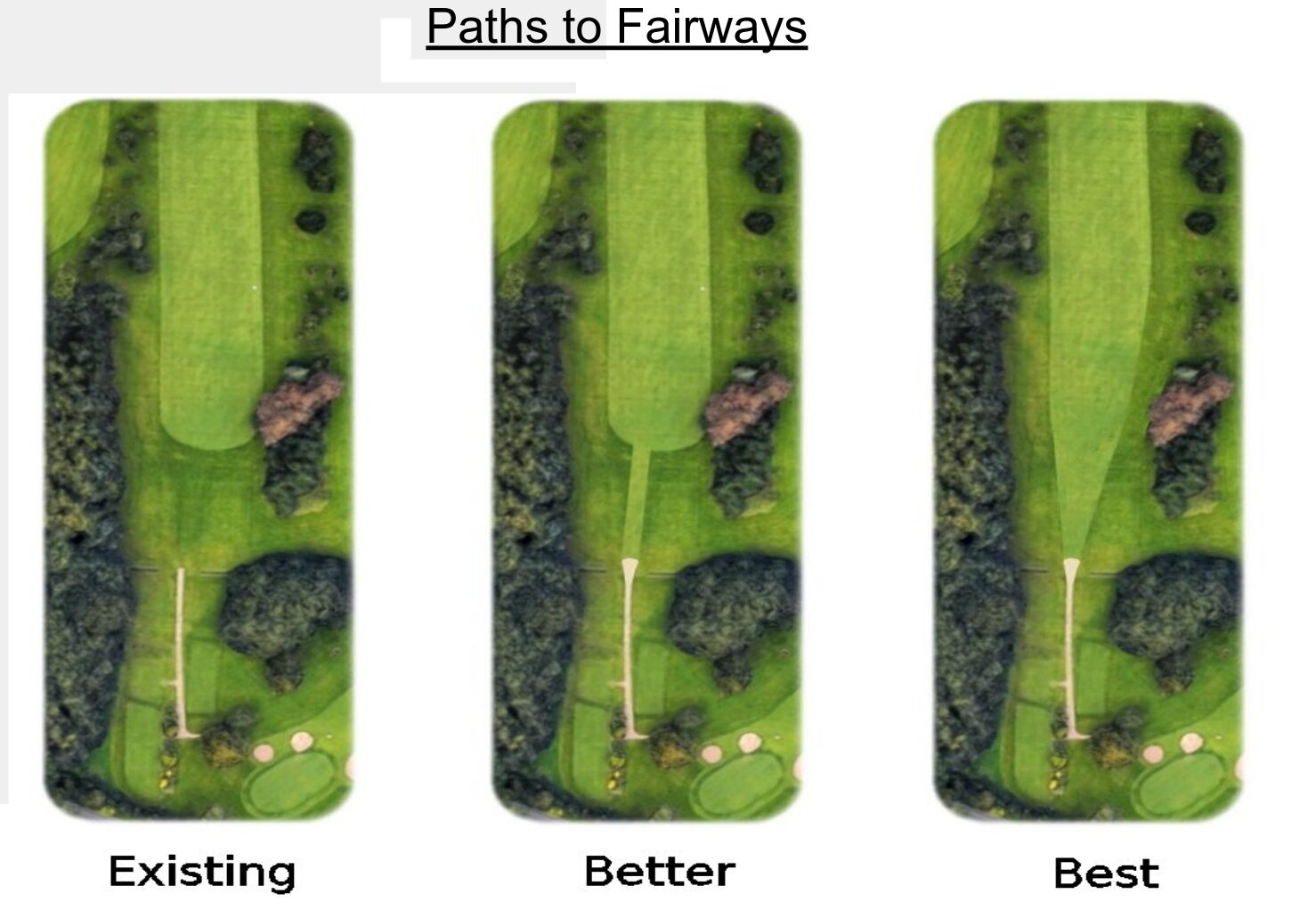
3. Create wide grass paths
Narrow, worn routes quickly become muddy and difficult in winter. A more effective approach is to:
- Cut wide grass paths
- Particularly through wetter areas
- Link greens, tees and key routes
Allow golfers to walk the course on short grass wherever possible. This reduces wear and improves winter playability.
4. Record and review winter damage
The months after winter are the best time to identify problem areas. Clubs should:
- Photograph damaged areas
- Note their location
- Identify patterns of wear
Damage is usually predictable and occurs in the same places each year.
5. Plan ahead for next winter
Decisions affecting winter playability should be made now, not when problems occur. This includes:
- Reviewing temporary green locations
- Identifying better positions where required
- Planning access routes and movement
- Programming aeration or drainage works
6. Consider robotic mowing
Robotic mowing can play an important role in improving winter conditions. Clubs should use the months ahead to:
- Research available systems
- Assess suitability
- Consider trial areas
Its key advantage is the ability to:
- Maintain cutting with lighter equipment
- Extend the cutting season
- Operate with less impact on soft ground
A combined approach using robots alongside conventional mowers is likely to give big improvements in playability.
Final thoughts
The months following a wet winter are critical. This is the time to:
- Learn from recent conditions
- Make practical improvements
- Prepare for the future
The best time to prepare for next winter is during the growing season.
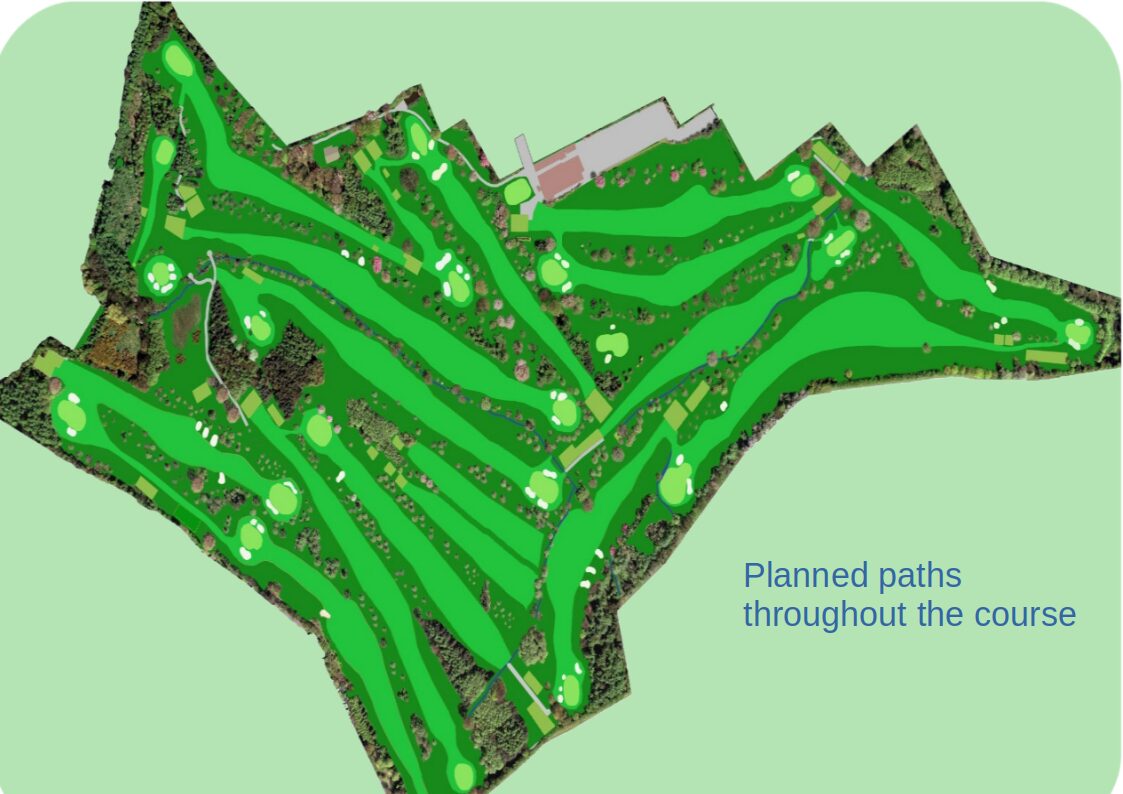
Here is an example of planned grass routes across a course to allow players to walk on short firm grass from the first hole to the last, which proved to be very effective: