Planning Now for a Better Winter
The best winter surfaces are created months earlier.
Introduction
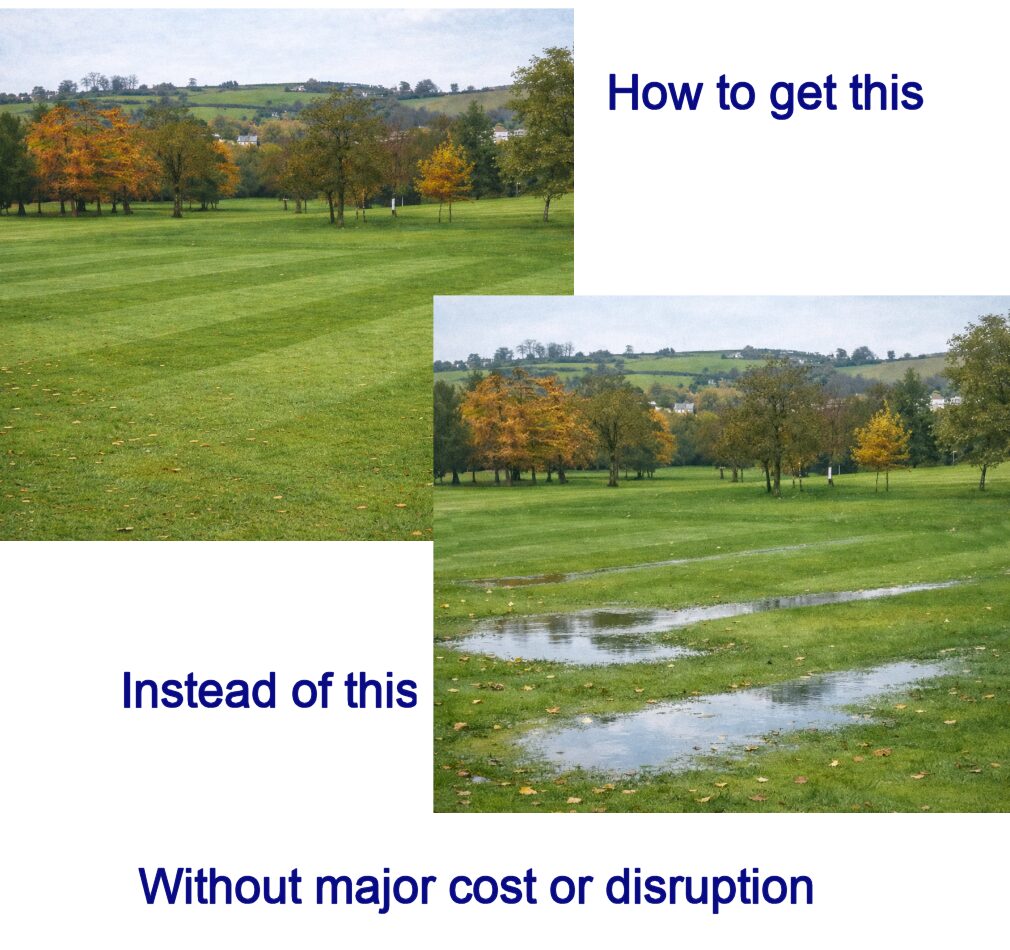
Golf courses are now drying out and playing well again, but this is the time to start planning work for the autumn and winter ahead.
Many of the problems experienced during recent winters can be greatly reduced through relatively simple work in late summer and early autumn, when ground conditions are firm and disruption can be minimised.
This note brings together some practical, low-cost measures to improve winter playability, restore drainage performance and reduce unnecessary damage to courses.
Key points for golf clubs
- Plan works now for late summer or early autumn when ground conditions are suitable
- Restore and maintain existing drainage wherever possible
- Establish winter traffic routes early while surfaces are firm
- Investigate existing drains before committing to major new schemes
- Carry out aeration and decompaction before soils become saturated
- Consider robotic mowing systems to extend winter cutting with less surface damage
Detailed planning now will ensure that the course is well prepared for the winter ahead.
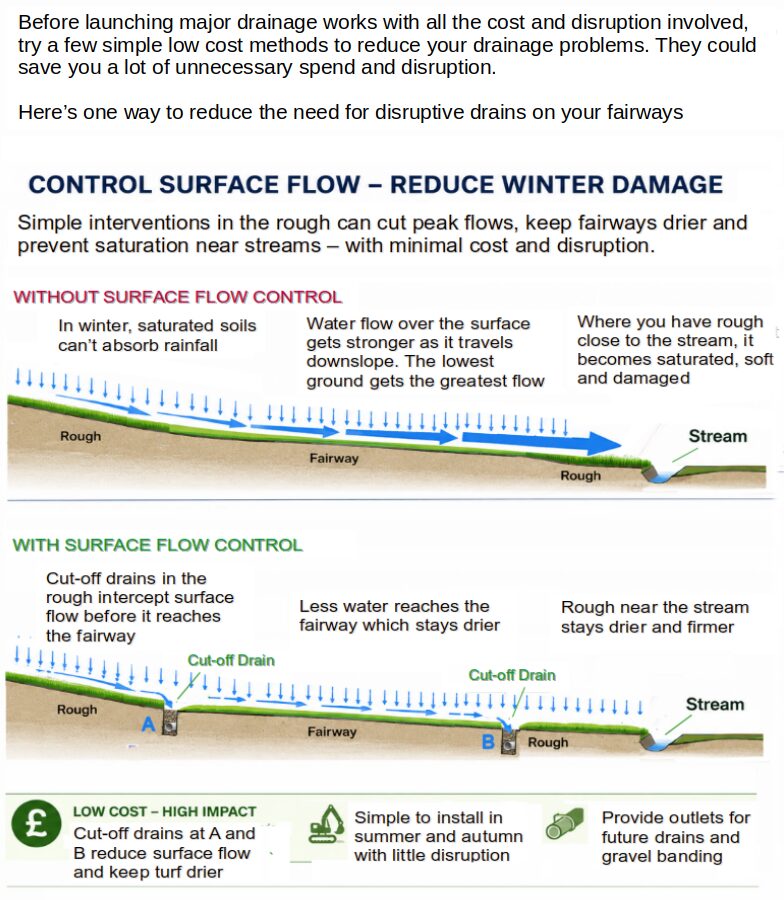
Here’s a simple way to reduce flooding on sloping fairways without extensive works:
1. Checks on your existing drainage system
Before committing to heavy spending on new drains it’s wise to check if existing drains are sufficient or can take extra connections. Many clubs replace drains that still have decades of potential life remaining.
- Trial pits - open trial pits on important or troublesome drains to see if they are working. They can often be tested by scraping off the turf over a gravel drain and simply pouring water into the gravel. If it flows away quickly it’s likely the drain is functioning, but continue on down with more tests until you reach the outfall.
- Dye testing - environmentally friendly dyes can be used to trace the direction of your drains, but be careful not to use too much. It can take a long time for dye to reach an outfall and you don’t want to cause any concerns downstream.
- Drone surveys - if we are lucky enough to get a spell of warm dry weather it can be very useful to get a drone survey, as old drains often show up.
- Open manholes - open up any existing manholes to check on flow or potential blockages.
- Level surveys - if there is any doubt about suitable gradients, check levels using a professional surveyor if possible. Drains laid with inadequate fall can silt up and fail.
- Professional advice - professional advice can often reduce unnecessary cost and disruption by helping clubs optimise layouts and construction methods.
2. Refreshing gravel drains
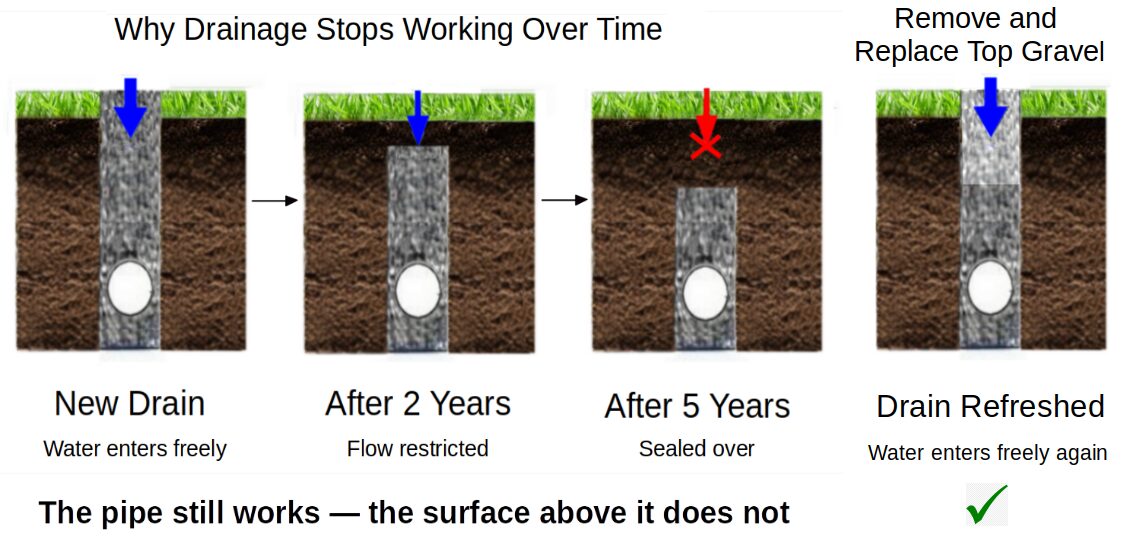
In many cases, drains can be restored by removing the sealed surface layer using a turf cutter with a narrow blade, a Wizz Wheel or trencher set to shallow depth, and replacing with clean gravel.
- Coarse gravel (approx. 20mm) is suitable for topping drains in the rough
- Fine natural gravel (approx. 6mm) is more appropriate in fairways
- Sand is not ideal as it seals too quickly and can wash away in heavy rain
3. Check the outfalls
Even a well-maintained system will not function if the outlets are blocked. Regular inspection is simple and often overlooked.
Common issues that can block outfalls include:
- Sediment build-up in ditches or streams
- Vegetation growth
- Debris accumulation
4. Gravel banding
Gravel banding works best:
- Over short distances (typically no more than 20 metres)
- Where it feeds into effective drains or permeable soils
- Best carried out in dry conditions (e.g. autumn)
- Installation in soft ground can cause damage with little benefit
5. Verti-draining and soil aeration
Works best when carried out in dry conditions. It:
- Fractures compacted soils
- Improves movement of water, air and roots
- Enhances turf quality and resilience
Late summer or early autumn is a great time to vertidrain or carry out other aeration works, before soils get saturated. Putting heavy machines on soft ground can cause more damage than it’s worth.
6. Robot mowers for soft fairways
Wet winters and soft spring conditions cause major problems, with conventional mowing equipment often creating rutting and compaction.
Many clubs are now trialling robotic mowers to extend the cutting season, sometimes throughout winter, with significantly less surface damage.
Final thoughts
The best winter surfaces aren’t created during winter itself.
The months ahead provide the best opportunity to restore drainage performance, improve turf resilience and prepare courses for the wetter conditions that increasingly affect winter golf.
Simple work carried out early and in the right conditions can often avoid major disruption and unnecessary expense later.
The recommendations above should help achieve those goals.
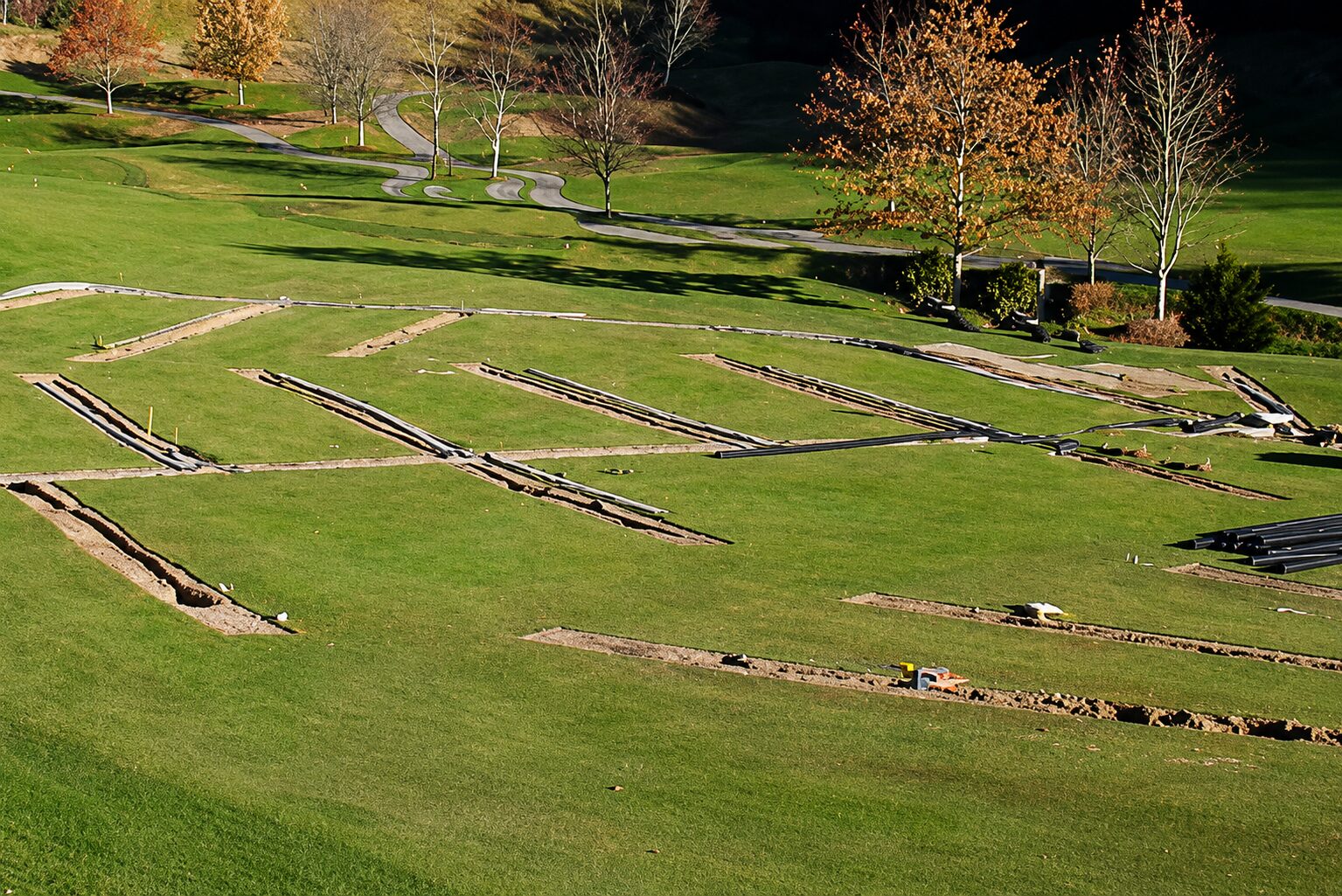
Let’s do the simple things first to avoid all the cost and disruption of major works like this: