
Lessons from a Very Wet Winter
Preparing Golf Courses for the Next Wet Season - Part 1 of 5
Introduction
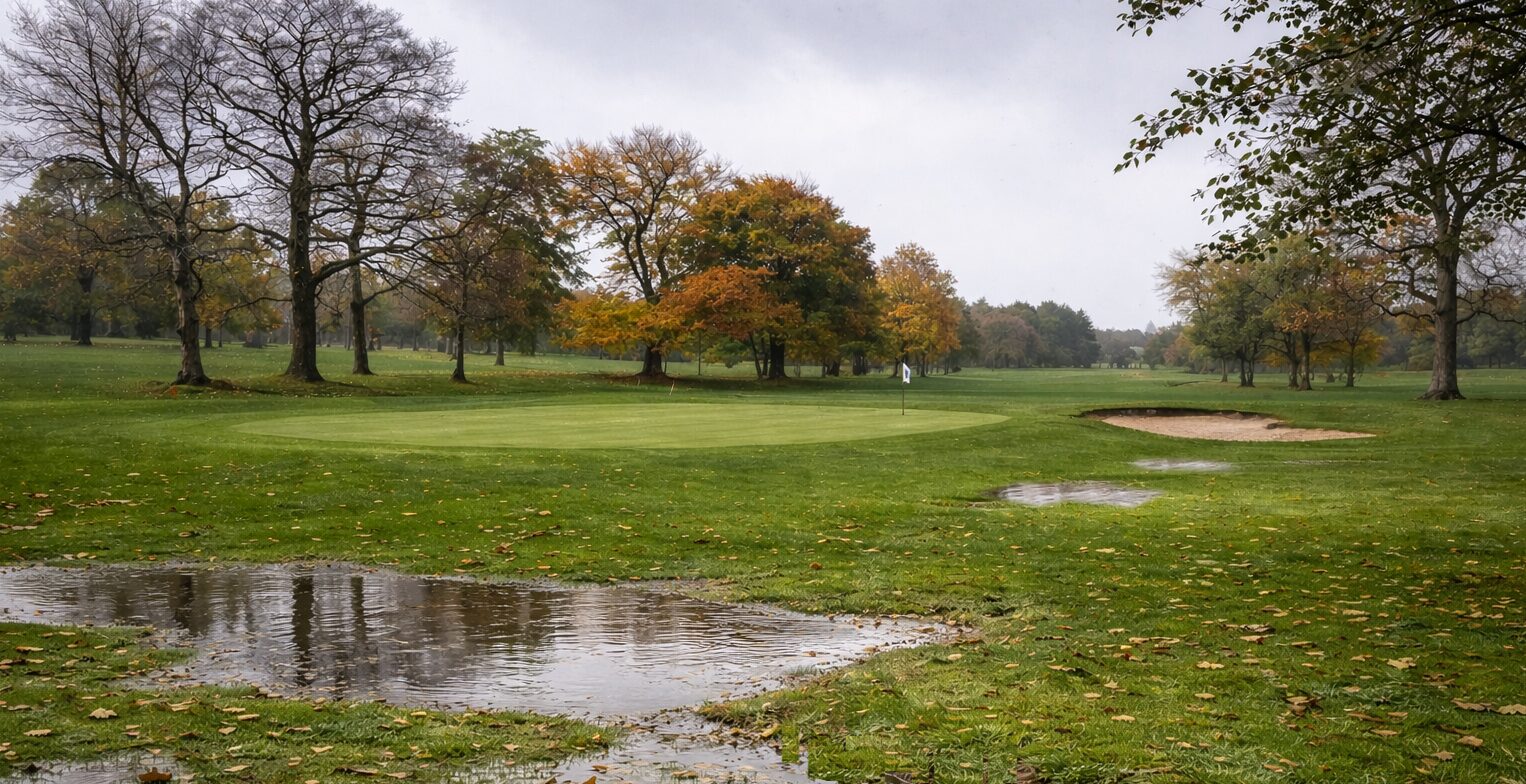
Last winter created serious playability problems on many golf courses.
Prolonged rainfall, saturated soils and concentrated traffic led to muddy walk-offs, soft fairways and growing pressure on greens staff to keep courses open.
Many clubs are now asking this question:
What can we do to avoid the same problems next winter?
This note outlines practical steps that clubs can take during the coming months to improve winter playability and make better decisions about drainage and course management.
Key points for golf clubs
- Wet winters are becoming the norm rather than the exception
- Many problems are caused by compaction and surface sealing, preventing water reaching drains
- The months after a wet winter are the best time to record and investigate problem areas
- Avoid drainage work, slicing or spiking while soils remain saturated
- Plan drainage works for late summer or early autumn when ground conditions are suitable
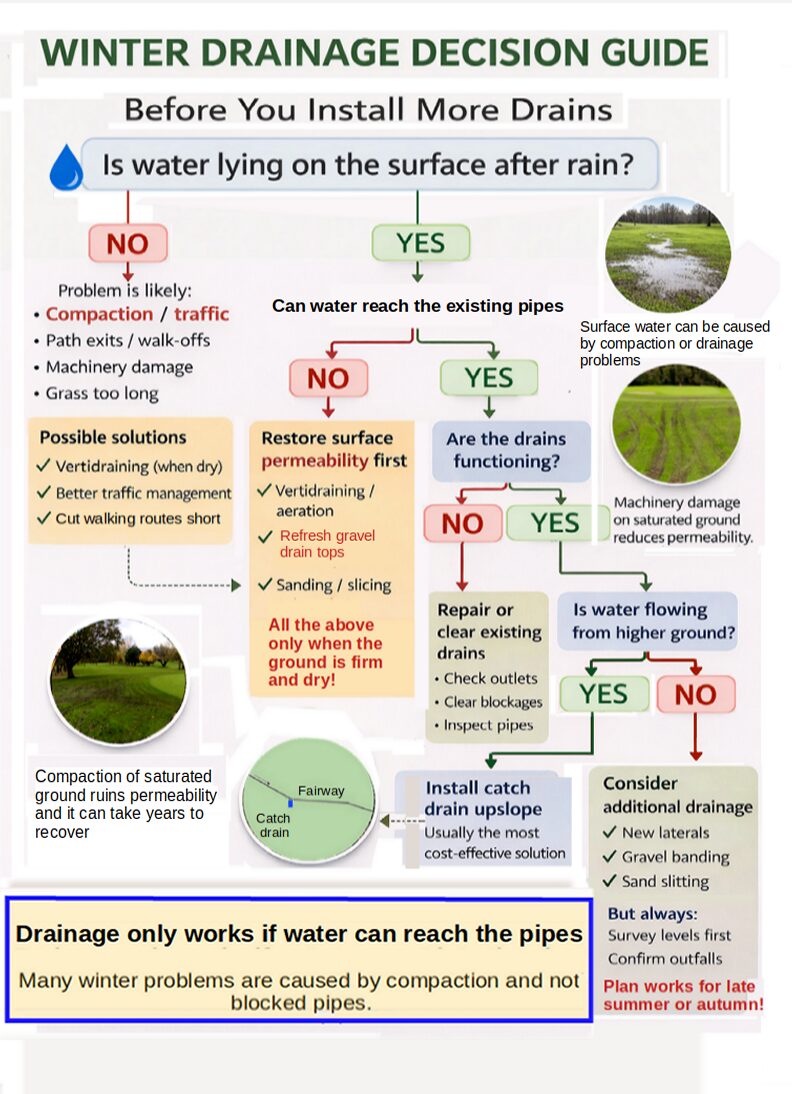
The decision guide below summarises the most common causes of winter drainage problems and the questions clubs should consider before committing to major drainage works.
1. What to do now (late winter / early spring)
Before the course dries out and memories fade, clubs should record where winter problems occurred.
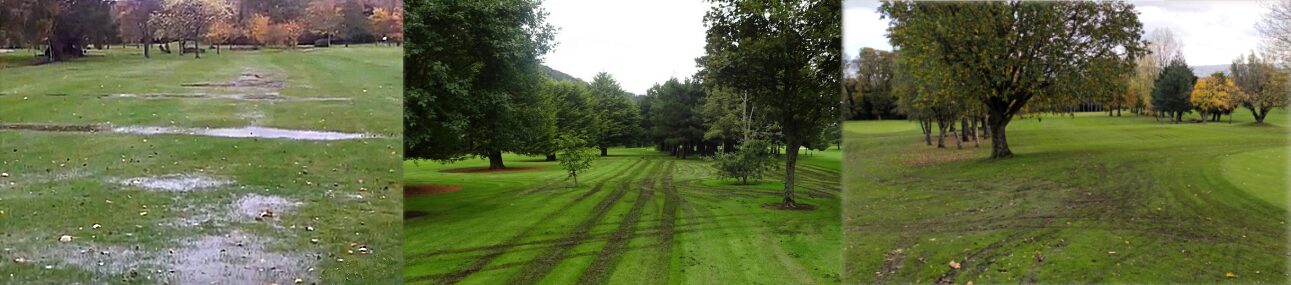
- Record where problems occurred
- Photograph wet or damaged areas
- Map problem locations on the course
- Identify muddy walk-offs and path exits
- Note areas damaged by machinery
Avoid major drainage or aeration work while soils remain saturated. Operations such as gravel banding, slicing or trenching carried out in wet conditions can damage the soil and increase compaction, which can take years to recover.
2. What to do when the ground dries (late spring / summer)
As soil conditions improve, more effective work becomes possible. Typical actions include:
- Checking drain outfalls and clearing any that are blocked
- Digging trial pits to locate drains and checking flows with water and dye
- Identifying and tracing sealed gravel drains that might be refreshed with new gravel
- Vertidraining compacted areas, concentrating on the problem spots
- Investigating existing drainage systems with drone surveys if possible
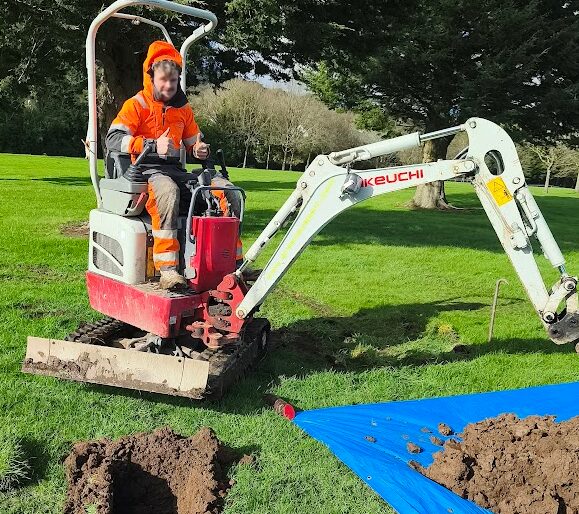 Trial pits to locate drains and examine soil conditions
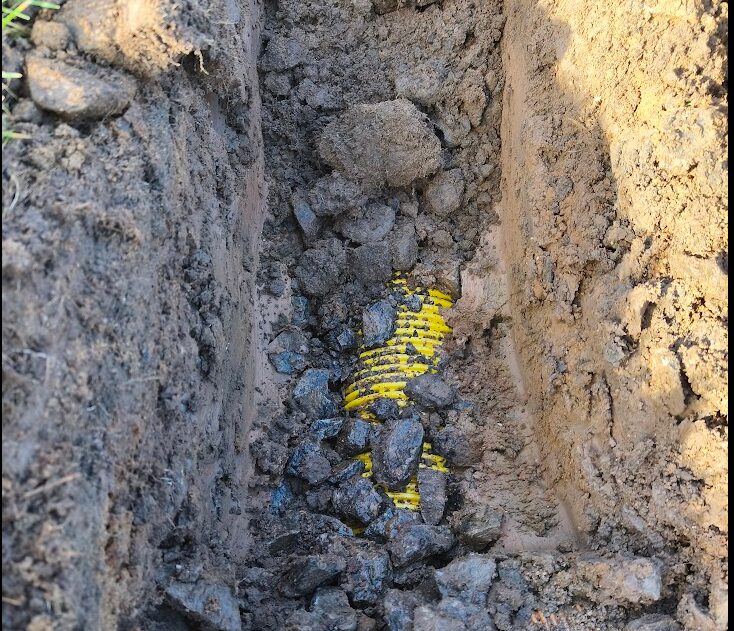 Trial pits can confirm whether existing drains are functioning
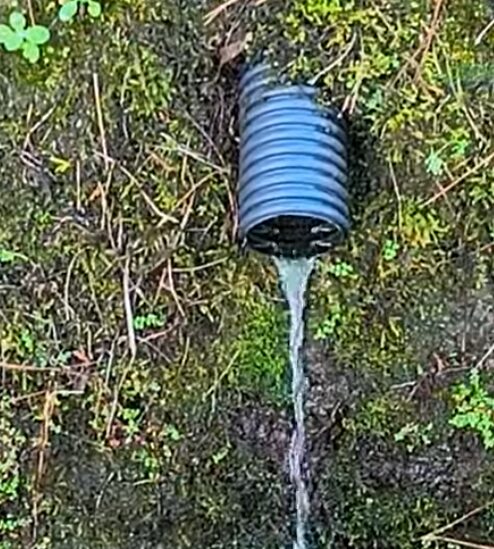 Drain outfalls should be checked to ensure water is flowing freely
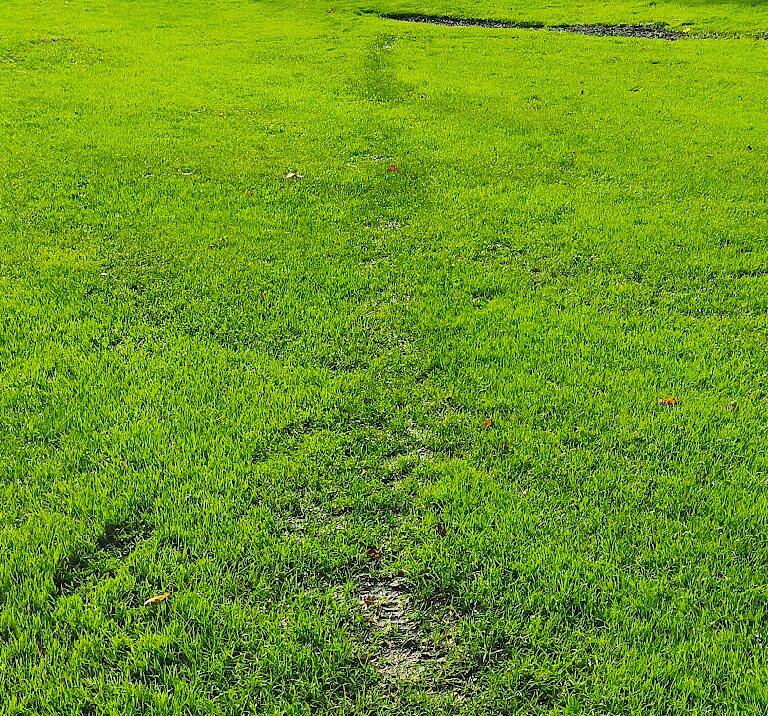 Old drains become sealed, preventing water entering the system
3. Start to plan for autumn
Major drainage works are usually best carried out in late summer or early autumn. Planning should begin well in advance and may include:
- Mapping the existing drainage system
- Confirming reliable outfalls
- Carrying out level or contour surveys
- Identifying where surface water flows onto fairways or greens
- Deciding on priorities, budgets and capabilities
Looking ahead
Many courses are considering robotic mowing systems which can operate in much softer ground conditions than conventional machinery, greatly reducing machinery loading during winter months and the resulting rutting and compaction.
This is an area I’ll explore in a future article, but I recommend that you investigate the technology. (See Technical Note 9: The Business Case for Robotic Mowing.)
Final thoughts
The winter just experienced should not be dismissed as an isolated event.
Courses that use the coming months to investigate problems and plan improvements will be far better prepared for the next wet season.
Preparation and planning work when conditions are suitable remain the most important factors.
In the next part, I’ll discuss the methods for investigation and mapping of your existing drainage system.
Simple solutions are often the best.