
Investigating Golf Course Drainage Systems
Understanding Existing Drainage Before Installing More
Introduction
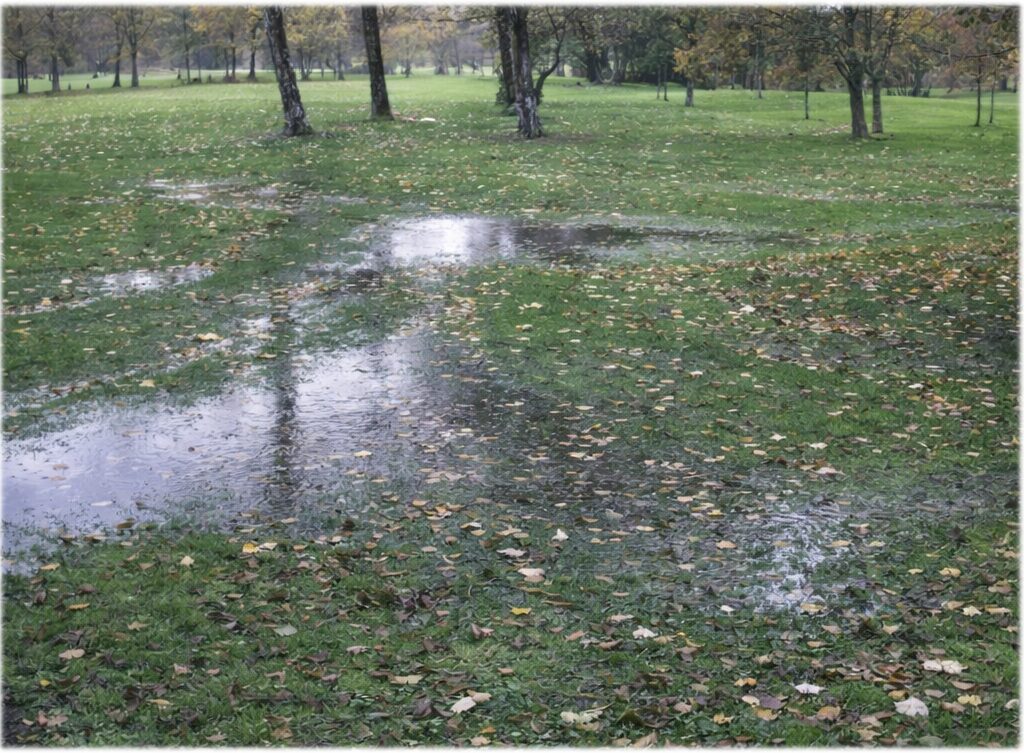
Technical Note 1 explained that many winter playability problems occur because water cannot reach existing drains, rather than because additional drainage is required.
Before installing new drainage, clubs should first understand how their existing drainage system works and whether it is functioning properly.
In many cases, simple investigation can identify the cause of problems and avoid unnecessary or ineffective drainage works, wasting money and damaging the golf course.
Key points for golf clubs
- Most golf courses already contain extensive drainage systems
- Water often doesn’t reach drains because of compaction or surface sealing
- Drainage systems can fail due to blocked outlets or poor gradients
- Investigating drainage is usually straightforward and low cost
- Good investigation helps target the right solution
1. Locate existing drains
Drainage systems have often been installed over many years without accurate records.
- The location of drains is often uncertain
- Pipe sizes and depths may vary
- Access chambers can be grown over
- Trees may interfere with older drains
- Older systems may not follow consistent patterns
Clubs should try to locate existing drains before considering new work, which may include:
- Drone surveys and aerial photographs
- Researching old maps if available
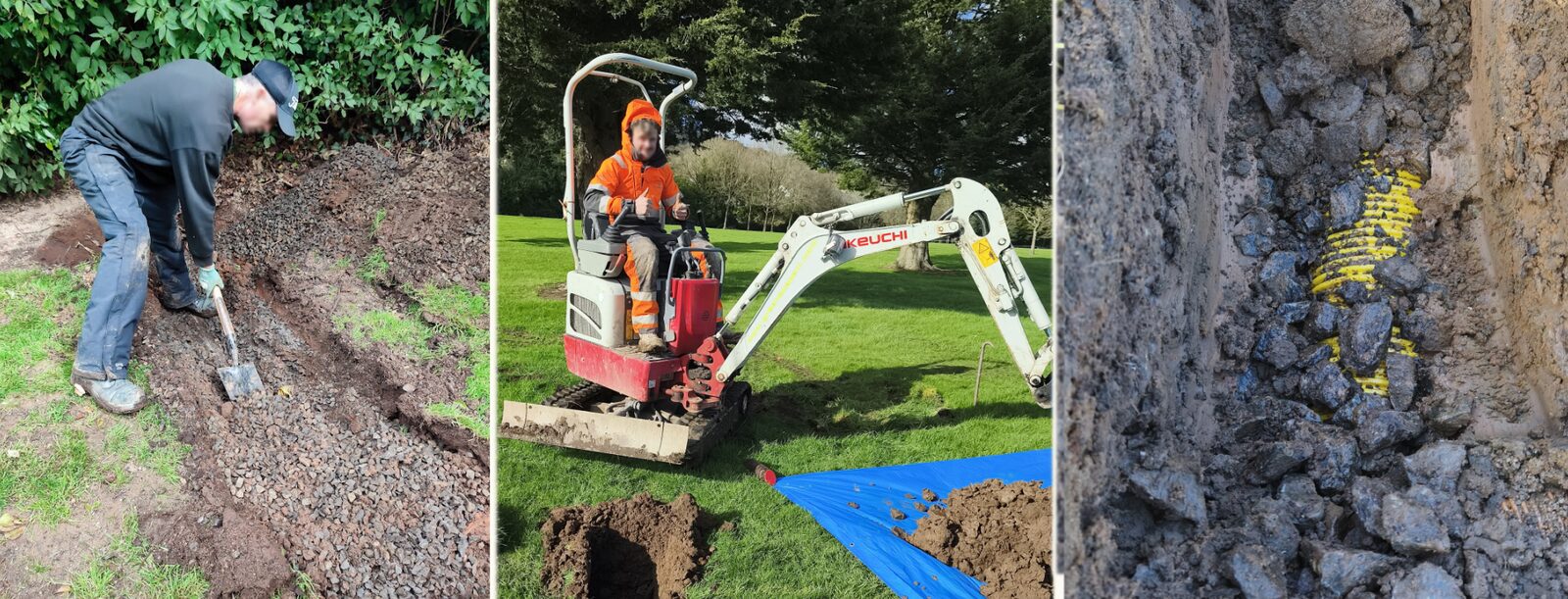
- Probing with a steel rod to locate gravel trenches
- CCTV survey of larger pipes
- Dye testing to test pipe viability and direction
- Digging trial pits to confirm pipe location
Even a basic understanding of where drains are located can be extremely useful.
2. Check drain outfalls
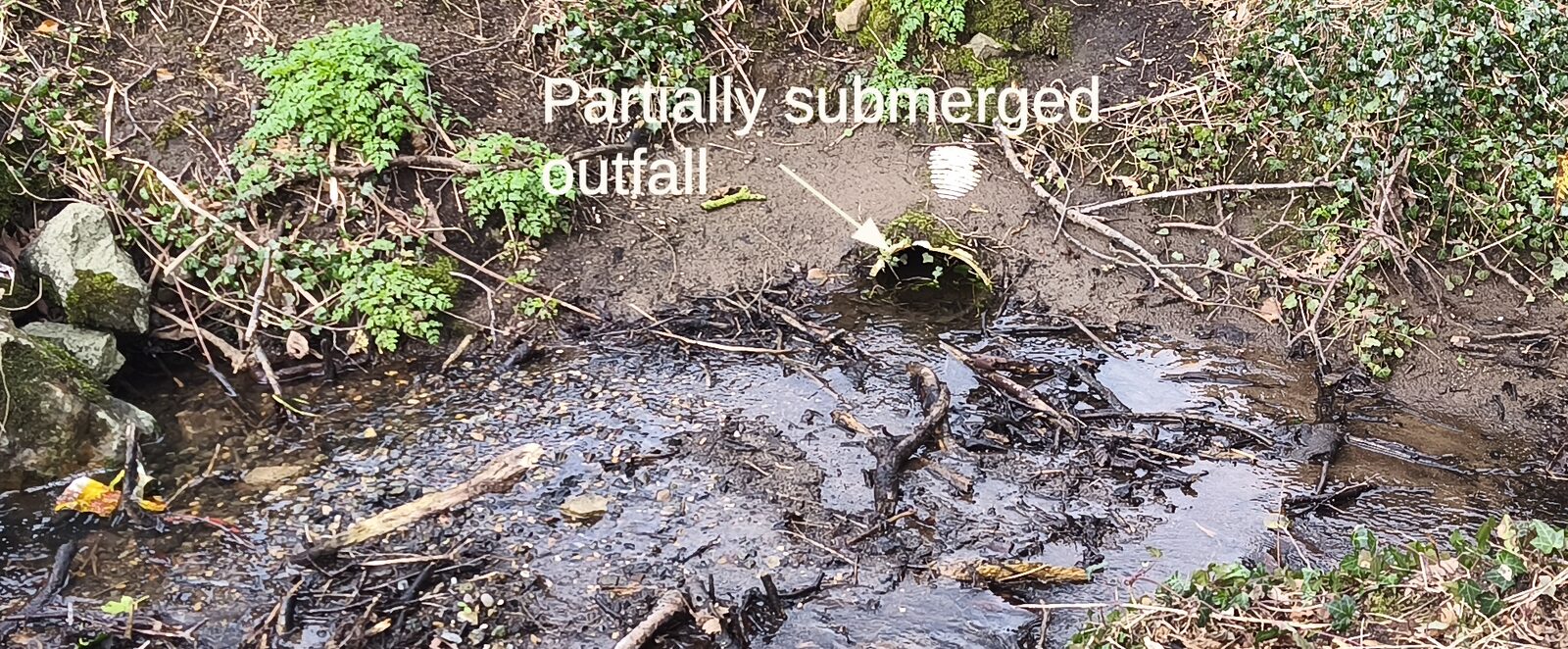
A common cause of drainage failure is not the drains themselves, but the outfall.
If water cannot leave the system, the drains will not function.
Clubs should check:
- Pipe outlets into ditches or streams
- Culverts and downstream connections
- Whether outlets are submerged during wet periods
Outfalls should be:
- Clearly visible
- Free from blockage
- Discharging freely after rainfall
This is a simple but often overlooked step.
3. Use trial pits to understand the system
Trial pits are one of the most effective ways of understanding a drainage system.
A small excavation can reveal:
- The presence and condition of pipes
- The type and depth of backfill
- Whether gravel is clean or sealed
- The surrounding soil profile
Trial pits can also indicate whether water is reaching the drain, sometimes by dye testing.
They are usually quick to carry out and can provide valuable information at relatively low cost.
4. Identify areas of compaction
Even a well-designed drainage system will not function if water cannot move through the soil.
Common causes of compaction include:
- Repeated machinery traffic, particularly in winter
- Concentrated winter play routes
- Wear around greens, tees and paths
Compacted or sealed surfaces prevent water from infiltrating, meaning that drains receive little or no flow. In many cases, deep aeration or changes to traffic patterns may be more effective than installing additional drainage.
5. Understand surface water movement
Before installing new drainage, it is important to understand how water moves across the course.
Clubs should consider:
- Where water enters an area
- How it flows during heavy rainfall
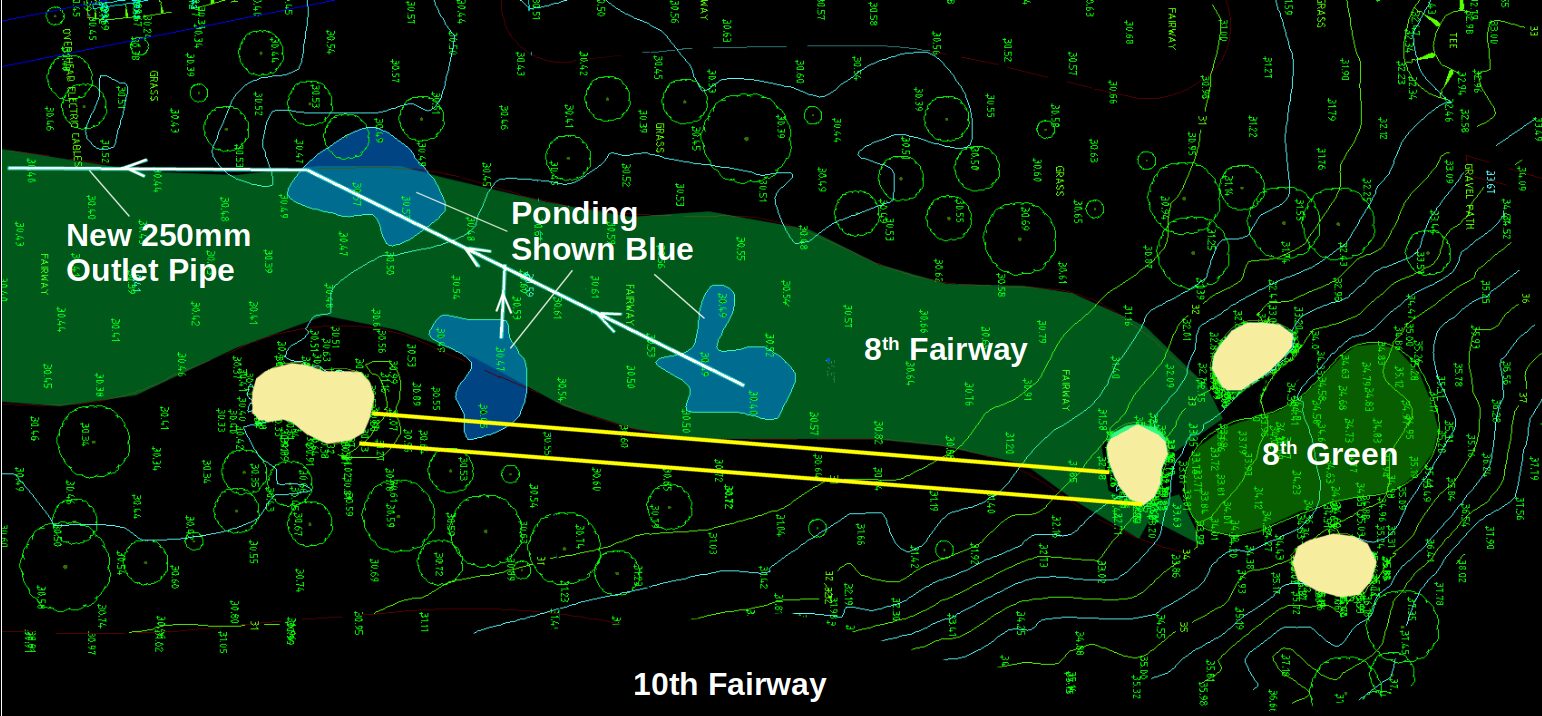
- Where it collects or ponds
In some cases, simple measures such as interceptor drains or minor surface regrading can be more effective than installing additional pipes.
In flat areas where gradients are unclear, a level survey is often essential when works are being planned.
Final thoughts
Many golf courses already contain more drainage than is commonly realised.
Taking time to investigate how existing systems function will usually lead to better decisions and more effective use of resources.
Installing additional drainage without this understanding can be costly and may not resolve the underlying problem, while wasting money and potentially damaging the course.
Technical Note 3 will address managing traffic and compaction in wet conditions.