The Biggest Change in Golf Course Maintenance for 50 Years?
More Mowing Days. Better Turf. More Golf.
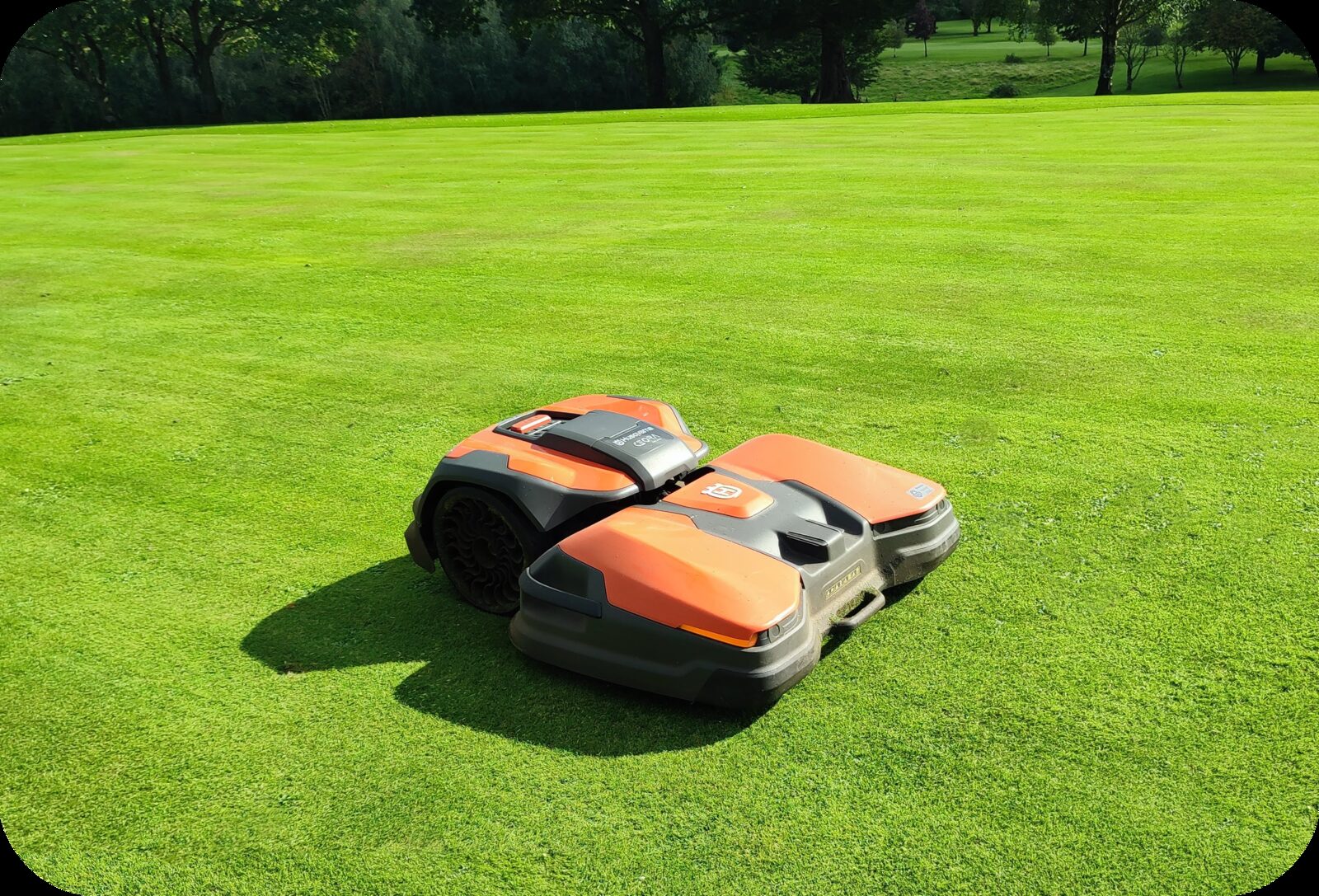
Commercial robotic mowers have been talked about for several years, but until recently I wasn’t convinced they were ready for the demands of a busy golf course.
That has changed.
Having now seen commercial installations in operation, including one golf club that has relied almost exclusively on robotic mowing for the past three years, I believe the technology has reached the point where every golf club should at least evaluate it.
Not because robots are fashionable.
Not because they replace greenkeepers.
But because they have the potential to become the biggest change in golf course maintenance for decades.
The biggest benefit isn’t lower costs. It’s better golf.
Most discussions about robotic mowing focus on labour savings, fuel costs and staff shortages.
Those benefits are real.
But I don’t believe they are the biggest opportunity.
In my view, the greatest benefit is much simpler.
Robot mowers increase the number of days when mowing is possible.
And that can lead directly to more golfing days.
For more than forty years I’ve helped golf clubs improve drainage and reduce winter wetness.
Good drainage undoubtedly improves playability.
But I’ve gradually come to realise that drainage is only part of the solution.
Good drainage is only half the answer. Managing machinery traffic when soils are saturated is just as important.
A different way of thinking
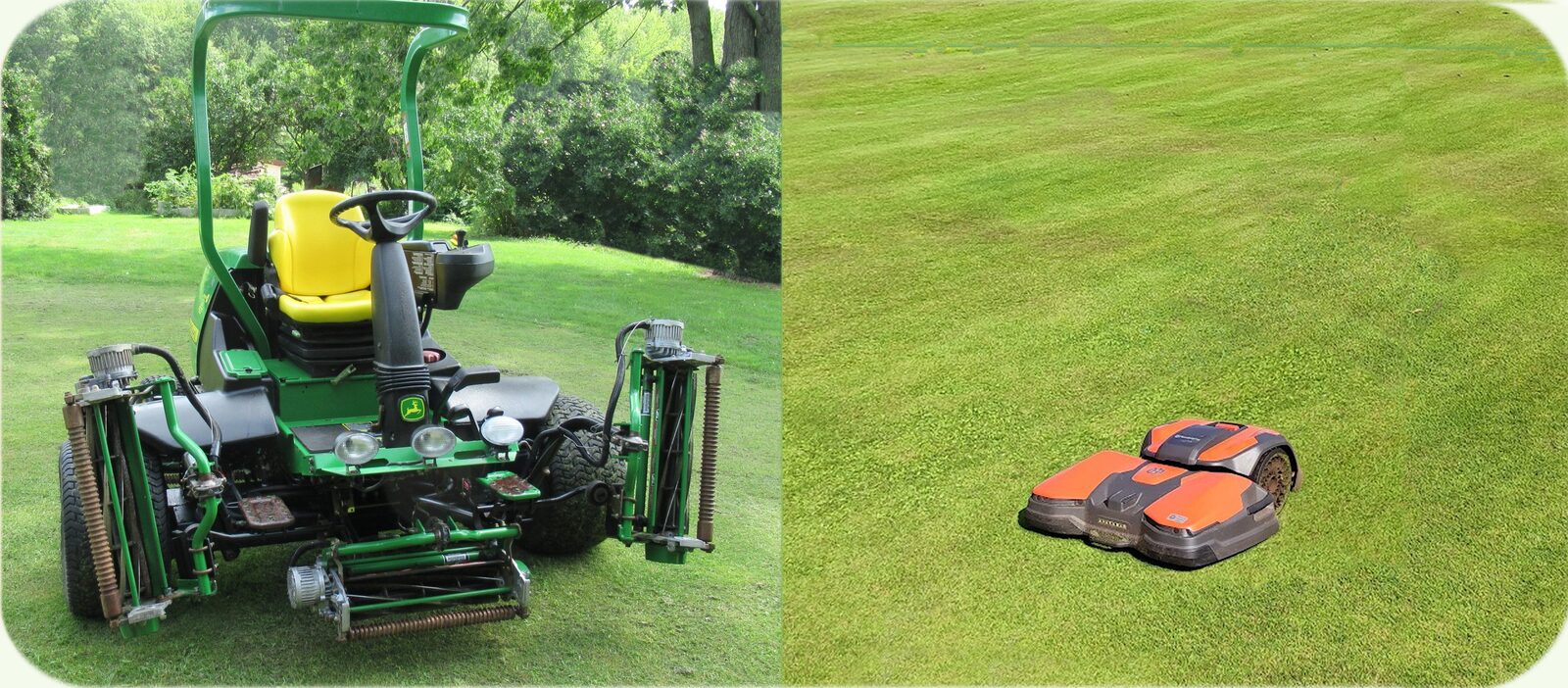
A conventional fairway mower, complete with fuel and operator, can weigh up to two tonnes.
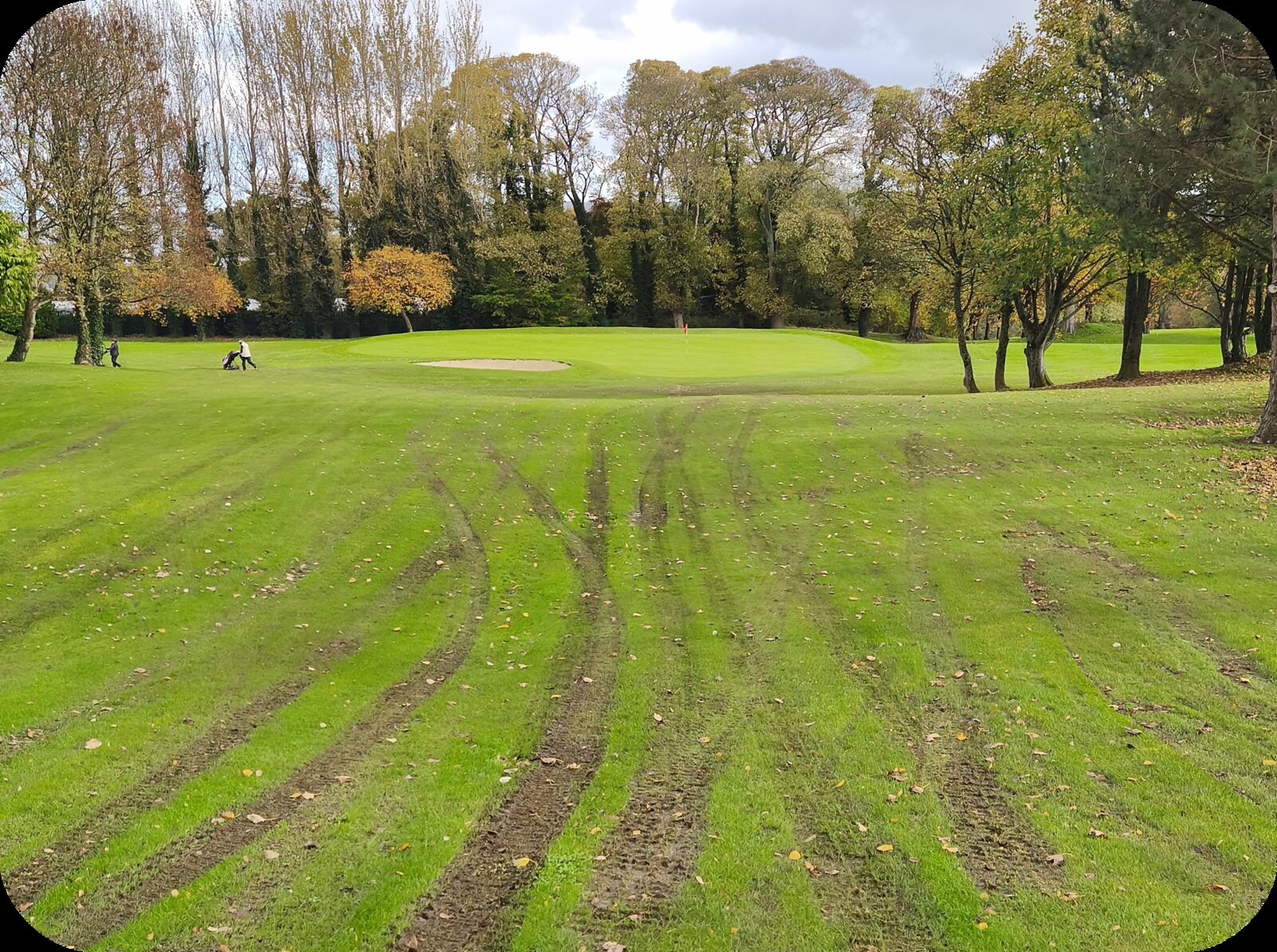
When soils are saturated, repeated trafficking inevitably contributes to rutting, compaction and surface damage.
The result?
Greenkeepers often have only two choices. Continue mowing and risk damaging the course, or stop mowing altogether and allow the grass to become longer until conditions improve.
Neither option is ideal.
Commercial robotic mowers fundamentally change that equation.
Typically weighing around 100 kg, they exert far lower ground pressure and can often continue maintaining fairways in conditions where heavier machinery would either damage the surface or remain in the shed.
That means:
- More mowing days.
- Better-presented fairways.
- More consistent playing surfaces.
- Less traffic damage.
- More golfing days.
- More green fees.
That’s a much bigger story than simply saving labour.
Better turf. Better use of greenkeepers.
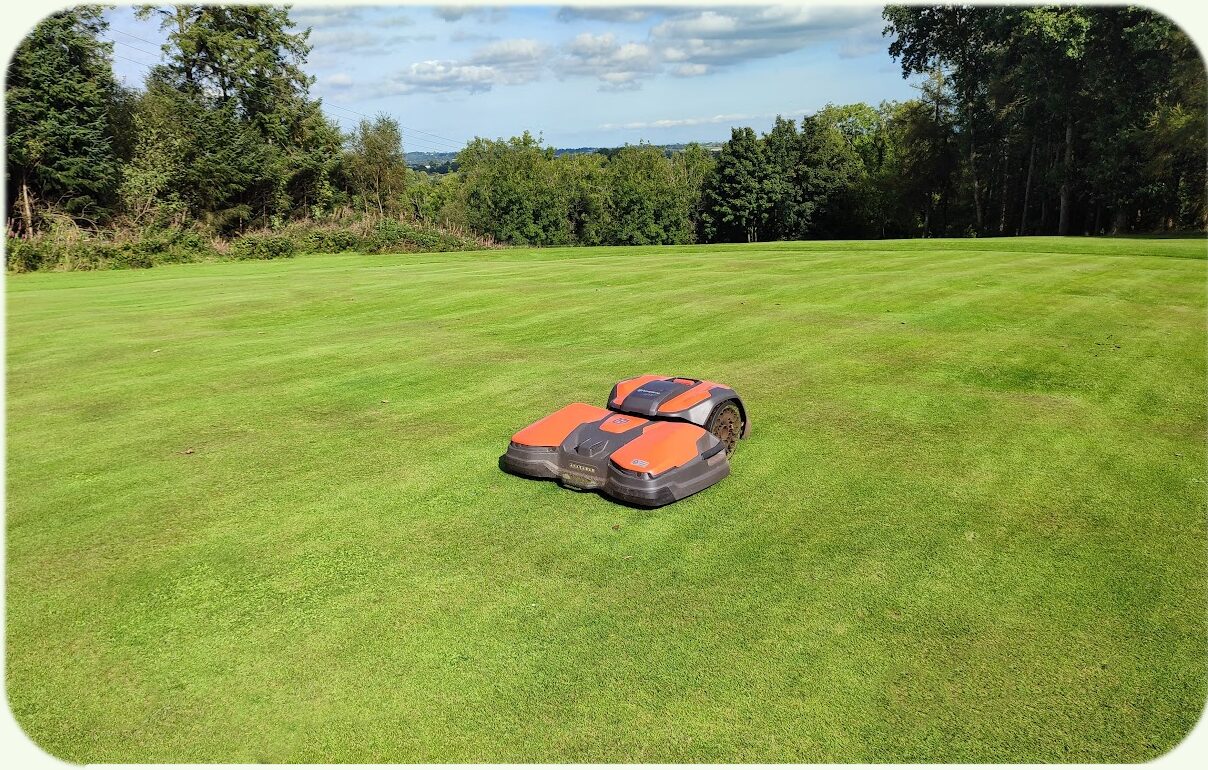
Frequent, light cutting helps maintain a consistently high-quality surface with very few visible clippings.
Reduced traffic means:
- Less rutting.
- Less compaction.
- Better root development.
- Improved turf quality.
- Better protection of previous drainage investment.
Members notice, even if they don’t always know why the course is looking and playing better.
I’ve also been impressed by the consistently clean finish achieved through continuous mowing. Rather than removing large amounts of growth every few days, robots remove only a small amount each pass, helping to maintain a tidy playing surface.
This isn’t about replacing greenkeepers.
If robots can take over routine mowing on the most vulnerable parts of the course, skilled staff can spend more time on work that delivers lasting improvements:
- Maintaining drainage.
- Improving bunkers.
- Irrigation.
- Woodland management.
- Environmental projects.
- Course presentation.
That may prove more valuable than any labour saving itself.
A practical approach
I’m not suggesting that golf clubs should replace every fairway mower overnight.
For many clubs, an interim hybrid approach offers the greatest opportunity.
Use robotic mowers where they provide the greatest benefit, on the wettest and most vulnerable fairways. Retain conventional fairway mowers for the drier areas, preparation for major events and periods of rapid growth.
Each machine is then used where it performs best.
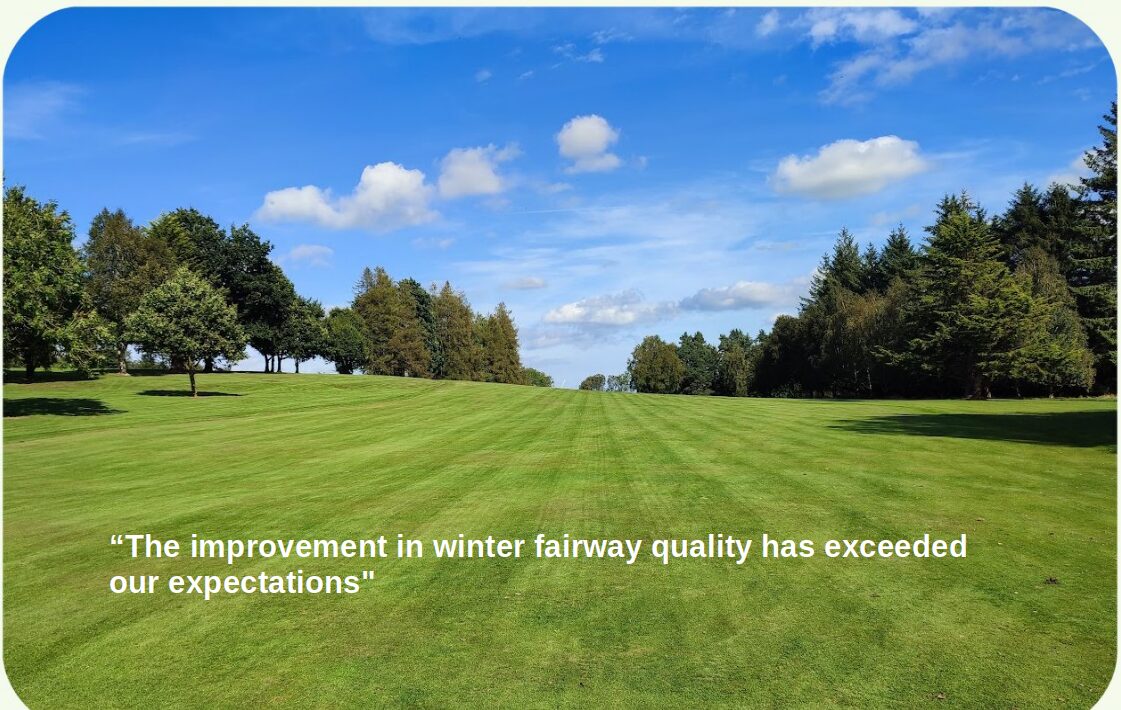
“The improvement in winter fairway quality has exceeded our expectations. After three years we wouldn’t go back…”
A final thought
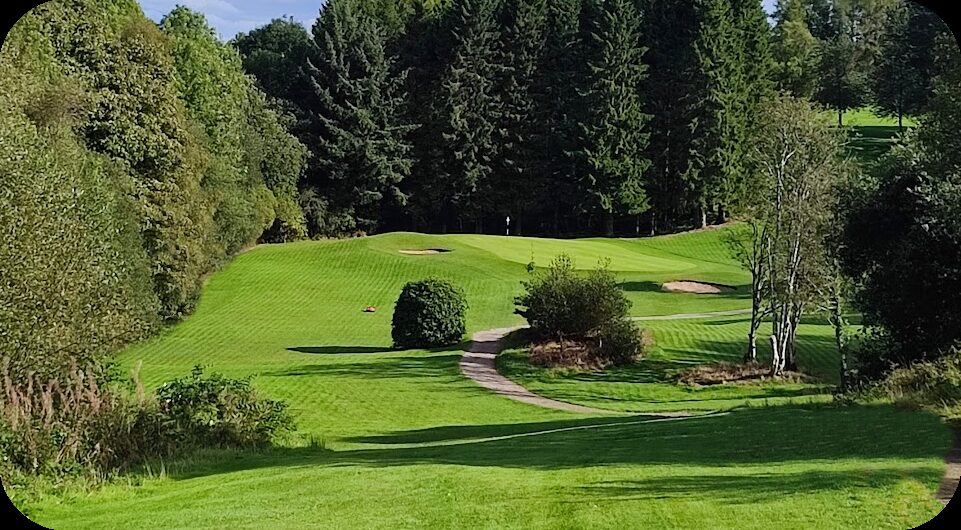
Five years ago I wouldn’t have written this article. The technology simply wasn’t ready.
Today there are several manufacturers offering commercial robotic mowers capable of maintaining golf course fairways, dealer networks are expanding and prices are becoming increasingly competitive.
More importantly, I’ve now seen enough successful installations to believe the technology deserves serious consideration.
During my career I’ve seen major advances in irrigation, greens construction, drainage, spraying technology and turf management.
I now believe robotic mowing has earned its place on that list.
Every golf club is different, and robotic mowing won’t be the right answer for every course, but I do believe every club should now be asking one simple question.
Could robotic mowing help us increase the number of days when mowing is possible, reduce traffic damage on saturated soils, improve turf quality and ultimately provide more golfing days for our members and visitors?
Next Technical Note - The Business Case for Robotic Mowing
Can a hybrid approach pay for itself? We compare conventional and robotic fairway maintenance for a typical golf club.