Robotic Mowing and Winter Playability
Why Golf Clubs Should Take It Seriously
Introduction
In Technical Note 3, I highlighted that much of the damage seen during wet winters is caused not by a lack of drainage, but by traffic on saturated ground.
This raises a practical question:
If machinery movement is part of the problem, can lighter mowing systems help?
Robotic mowing is no longer experimental. It is now being used successfully on golf courses and sports turf, both here in Northern Ireland and around the world, with evidence of improved turf density, more consistent surfaces, and reduced compaction.
It will not replace every machine. However, it is now a viable management option, particularly where winter playability is a concern.
Key points for golf clubs
- Robotic mowers are now a practical option for golf course maintenance
- Their lower weight allows mowing on softer ground with less damage
- Frequent cutting improves turf density and surface consistency
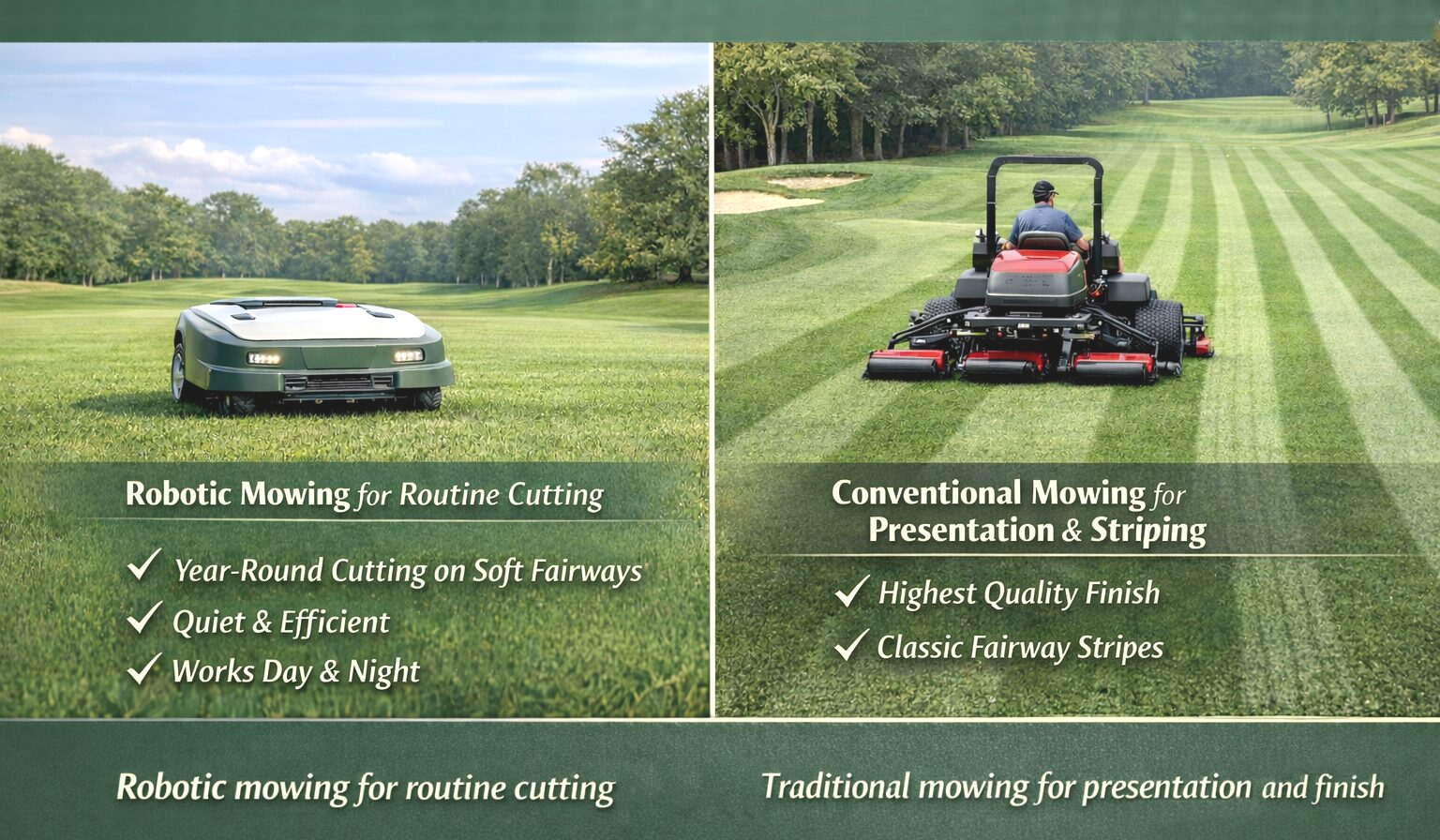
- They will not replace all conventional mowing, but can take over routine work
- A combined approach offers the best balance between playability and presentation
Turf quality and playability
The strongest arguments for robotic mowing are improved turf quality and less damage to soft fairways.
Frequent, light cutting helps to produce:
- Denser, drier turf
- Finer leaf structure
- More consistent playing conditions
For golfers, good lies and a consistent firm surface are far more important than how the mowing is carried out or what it looks like.
Reducing damage in wet conditions
Robotic mowers are significantly lighter than conventional machines. This reduces:
- Rutting
- Surface smearing
- Compaction in wet conditions
In simple terms: less weight means less damage, and a longer cutting season.
The best of both worlds
Most clubs will retain their existing mowing equipment for many years. This allows:
- Robotic mowers to carry out routine cutting, often throughout the year
- Conventional machines to provide striping and presentation when required
- Flexibility for areas not suited to robotic mowing
This “best of both worlds” approach is likely to be the most practical route for many clubs.
Final thoughts
Robotic mowing may not suit every course, but it is now too important to ignore where reducing machinery damage and improving winter playability are priorities.
Cost savings and reducing the pressure on available staff are other major benefits of robot mowers in the current environment.
For a detailed look at the financial side of that decision, see Technical Note 9: The Business Case for Robotic Mowing.